By Carole Plumb

The 212 Cochituate Road Advisory Committee met on Oct. 22 to press on with receiving more professional advice regarding the potential ways the four-acre town-owned property could be set up as housing for adults with intellectual and developmental disabilities.
The Committee has been advised on how individualized caregiving details for a person with an intellectual or developmental disability (IDD) has a major impact on the housing options during the three meetings. At the 2025 ATM, voters transferred custody of the parcel to the Select Board, authorizing it to dispose of the land “for affordable housing, shared-living housing for persons with disabilities and/or market-rate housing.” An amendment adopted on the floor requires that affordable or shared-living units accompany any market-rate units.
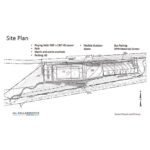
Although the warrant narrative said the site (zoned R-60) could, as of right, be split into two housing lots, it also acknowledged the Select Board could seek a comprehensive 40B permit for “multiple affordable units.” The parcel has no wetlands or aquifer issues, so it has capacity for increased housing density without the need for variances.
More representatives invited from IDD service providers—the Charles River Center, The Guild for Human Services, and Minute Man Arc—each described their organization’s approach to residential support, funding, and community integration. Previously TC Breazeale for Deaf-Blind model, High Spirits East, Mainstay Supportive Housing and Home Care and Corporation of Independent Living (CIL) have presented its models.
The committee has expressed interest in finding a way for a local placement option to be secured and to help those individuals aging out of school services at age 22. Aging parents with children with IDDs are looking for “forever homes” that can handle a 50 to 60-year commitment for placement, so financially stable models are a concern.
Members are also looking for ways to also add units to the Town’s State Housing Inventory (SHI) to keep Safe Harbor Status from unfriendly 40B affordable housing developments.
Charles River Center
Anne-Marie Bajwa, president and CEO of the Charles River Center, outlined her nonprofit’s 70-year history serving children and adults with developmental and intellectual disabilities, including autism and acquired brain injury. The Needham-based agency operates 33 group homes, including one at 93 Boston Post Road, with plans to open two more during the next fiscal year. Bajwa said each home requires about 1 acre for a single-story, five-bedroom “forever home” designed for long-term accessibility with wide hallways, overhead lift systems, and space for on-site parking.
Bajwa said the state Department of Developmental Services (DDS) funds operations but not land purchases, meaning towns must offer property at little or no cost to attract providers. Group homes are licensed for a maximum of five residents, with staff ratios determined by individual assessments. Bajwa emphasized the need for sites within neighborhoods with sidewalks and sufficient setbacks for safety and parking, adding that the Charles River Center no longer accepts large multi-story buildings.
She described public resistance when the center opened its first Wayland home in 2016 and said community education was crucial to easing fears. “People were very afraid,” she said, recalling that early neighborhood meetings helped build trust. She also cautioned that staffing shortages and inadequate legislative funding threaten long-term sustainability more than Medicaid cuts.
Bajwa said it is DDS who determines the placements but tries to keep individuals near their families when compatible with the home’s staffing level. But she noted that of the center’s 150 residents, only three are private-pay clients, as DDS funding covers most costs.
The Guild for Human Services
The committee next heard from Amy Sousa, CEO; Maureen Costello-Shea, chief program officer; and Ivette Rodriguez, chief financial officer of The Guild for Human Services. The Concord-based organization runs both a school and 24-hour adult residential program funded by DDS, serving individuals with intellectual disabilities, autism, and complex medical or behavioral needs. The Guild operates homes from Billerica to Foxborough, with several in Framingham and Sudbury.
Costello-Shea said the Guild seeks to develop new specialized group homes and is exploring duplex or side-by-side properties to allow staff sharing between houses. She said the state funds service delivery and occupancy costs, including mortgages and maintenance, but excludes the cost of land. “Providers must absorb the land purchase or construction cost until the first resident moves in,” Rodriguez said. Occupancy contracts typically run 27 years, after which DDS funds only maintenance.
Sousa said the Guild prefers to own its homes to control quality and make timely repairs but would consider a ground lease with the town. She confirmed that as a nonprofit, the Guild does not pay property taxes once a home is in service. Committee member Bill Whitney asked whether such homes count toward the town’s affordable housing quota; Costello-Shea replied that each bedroom typically qualifies as a unit under state guidelines.
The Guild is also developing a community café employing residents, in partnership with Revival Kitchen & Café and the Boston real estate firm GraffitoSP/NorthPond. The venture would be independently operated in a downtown or mixed-use setting rather than in a residence.
Committee members asked about DDS rules limiting proximity between homes. Costello-Shea said the state generally prohibits two DDS-funded group homes within about two miles but may grant exceptions case by case. She recommended the town coordinate with the DDS Middlesex West area office for guidance.
Minuteman ARC
Andy Richardt, housing development manager at Minuteman ARC in Concord describes how the nonprofit serves more than 1,000 individuals from early intervention through adulthood, including nine DDS-licensed group homes. Richardt described efforts to develop new “intentional community” models for residents not prioritized for group homes but unable to live independently.
He said Minuteman ARC is testing a “compact unit” concept: multiple one-bedroom apartments clustered with a shared community kitchen and staffed by an overnight “safe neighbor.” The model, he said, provides more independence at lower cost—about a fraction of the $200,000 annual per-person expense typical of group homes. Residents would use rental vouchers and MassHealth’s Group Adult Foster Care (GAFC) benefits to fund staffing and services, supplemented by family contributions.
Richardt noted similar efforts in Scituate, where a nonprofit is completing four duplex units with community space using town Community Preservation Act funds, and Rowley’s mixed-age “Winward Crossing” project, which combines senior and disability housing. He said Minuteman ARC is collaborating with CIL on a pilot project applying CIL’s nonprofit development model—where the builder owns the property until loans are repaid, then transfers ownership to the service provider, donating the equity.
Committee members questioned the long-term viability of the mixed-funding model and whether DDS would support co-locating different housing types on the same parcel. Richardt said he believes the agency will need to consider creative approaches to meet growing demand.
Committee Discussion
Bill Whitney suggested structuring a future request for proposals that allows conditional selection of a qualified provider once financing is demonstrated. Jean Milburn expressed concern about less-experienced applicants, while others noted the value of innovative models such as High Spirit East’s community concept, one of two written responses the committee received.
The committee agreed to draft an evaluation framework for comparing proposals and to organize a site visit to the 212 Cochituate Road parcel. Fay said legal questions regarding zoning, setbacks, and affordable-housing status had been sent to town counsel for review.